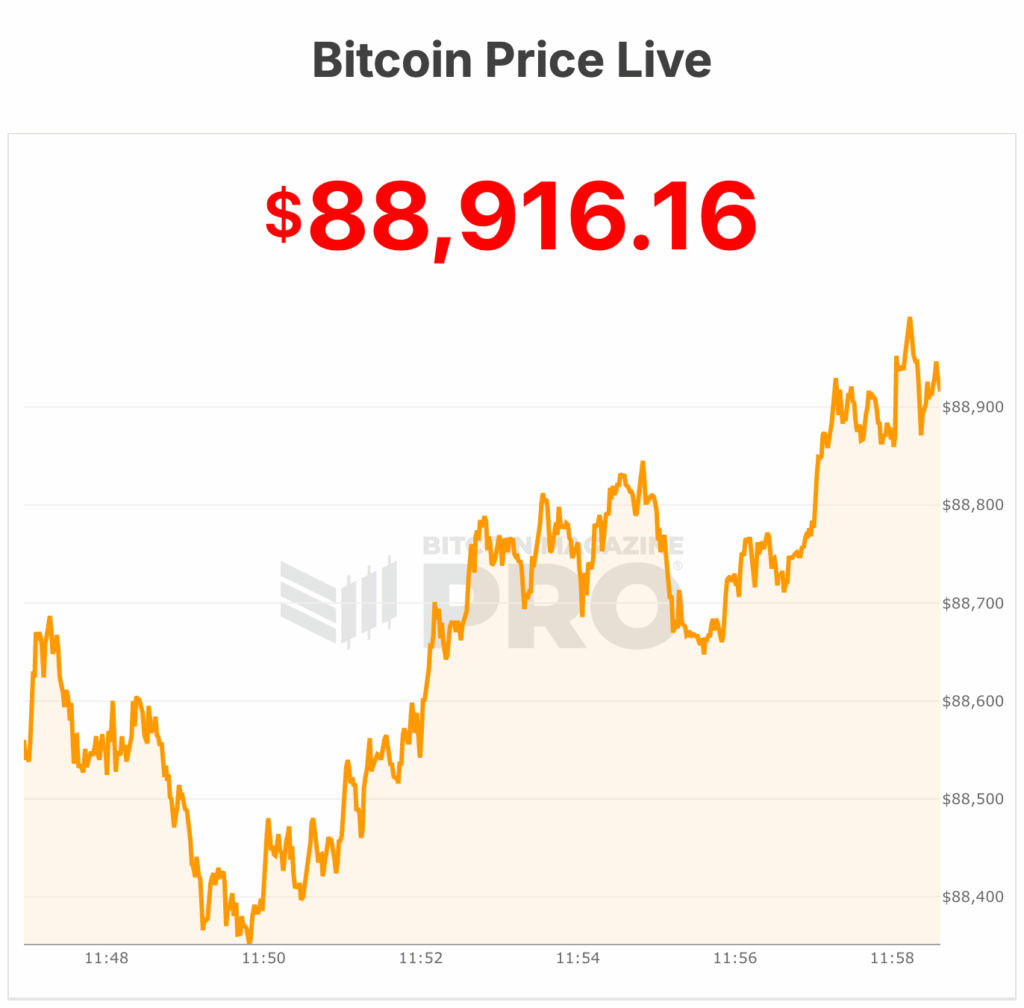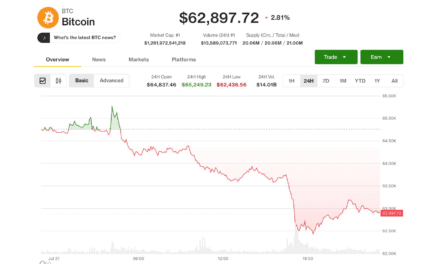
Bitcoin’s price saw a significant drop, settling in the $88,000 range on Friday, reflecting a decline of over 4% in the last 24 hours. Currently, Bitcoin is trading close to its seven-day low of $88,091 and remains approximately 4% below its recent seven-day high of $92,805.
The total market capitalization for Bitcoin now stands at $1.77 trillion, accompanied by a robust 24-hour trading volume of around $48 billion.
Despite this downturn, Wall Street bank JPMorgan has expressed a long-term bullish outlook on Bitcoin’s price trajectory. The bank continues to stand by its volatility-adjusted price target of $170,000 for Bitcoin over the next six to twelve months, linking it to gold volatility. Analysts assert that this model takes into account the variability in Bitcoin prices and mining costs.
A critical player in this market is Strategy (MSTR), recognized as the largest corporate holder of Bitcoin, with a current portfolio of 650,000 BTC. Their enterprise-value-to-Bitcoin-holdings ratio, known as mNAV, is presently at 1.13, a figure that has been characterized as “encouraging” by JPMorgan analysts. A ratio exceeding 1.0 indicates that Strategy is less likely to be compelled to sell its Bitcoin holdings during price fluctuations.
In addition, Strategy has established a substantial reserve of $1.44 billion in U.S. dollars, intended to cover dividend distributions and interest liabilities for at least the next 12 months, with plans to extend that coverage to 24 months.
Challenges in Bitcoin Mining
Bitcoin mining continues to feel the strain as network hashrate and mining difficulty decrease. High-cost miners outside of China are shutting down operations due to soaring electricity prices coupled with declining prices. Some are resorting to selling their Bitcoin holdings in a bid to maintain operational viability.
JPMorgan has recently adjusted its estimates for Bitcoin’s production costs down to $90,000, a decrease from the previous estimate of $94,000 last month. While falling hashrates could potentially lower production costs, the immediate consequence is increased selling pressure from miners.
Institutional investors are exhibiting caution; BlackRock’s iShares Bitcoin Trust (IBIT) has experienced six consecutive weeks of net outflows. Over this period, over $2.8 billion was withdrawn from the ETF, highlighting a lessened appetite among traditional investors, even as Bitcoin prices show signs of stabilization. This trend marks a notable shift from earlier inflows observed this year.
The overall cryptocurrency market continues to recover from the significant liquidation event that occurred on October 10, which erased over $1 trillion in market value and pushed Bitcoin deeper into a bear market.
While Bitcoin’s price has regained some momentum this week, the market’s condition remains precarious. Analysts from JPMorgan suggest that Bitcoin’s next major price movement will lean less on miner actions and more on Strategy’s ability to retain its Bitcoin holdings without selling. The mNAV ratio and the existing reserve fund lend credibility to the idea that Strategy can withstand market volatility.
Other possible catalysts for market movement include the MSCI index decision on January 15, which could influence Strategy’s stock and indirectly affect Bitcoin’s price. A favorable ruling could ignite a substantial rally for Bitcoin, according to analysts.
Last week, Michael Saylor of Strategy clarified the company’s position within the MSCI index debates. He affirmed that Strategy operates as a publicly traded company with a $500 million software business and a strategic treasury approach using Bitcoin, rather than functioning as a fund, trust, or holding company. He also highlighted that the firm has engaged in five digital credit security offerings with a substantial total notional value exceeding $7.7 billion.
Current Bitcoin Price Analysis
Analysts at Bitcoin Magazine observe a strengthening correlation between Bitcoin and gold, particularly during downturns, providing an insightful perspective on Bitcoin’s purchasing power when viewed against gold rather than USD.
Bitcoin’s recent breach below the 350-day moving average of approximately $100,000, along with breaking through the critical psychological threshold of $100K, has confirmed its entry into a bear market, with an immediate drop of around 20%. While USD charts may indicate an anticipated peak in 2025, the performance of Bitcoin relative to gold saw its peak in December 2024, which has since fallen over 50%, hinting at a prolonged bear phase.
Historical trends in gold-based bear cycles suggest that potential support zones are approaching, with current declines reflecting 51% over 350 days. These changes indicate institutional investment patterns and a tight supply rather than mere cycle fluctuations.
For now, the Bitcoin price hovers around $88,000, as the market watches for signs of recovery and volatility.