Write a new detailed article from
The best spot Bitcoin ETFs have made it easier than ever to invest in Bitcoin, but choosing the right one isn’t always straightforward. With multiple funds offering similar exposure, different fees, and varying levels of liquidity, it’s easy to wonder which ETF is actually worth your money.
That confusion is understandable. Since the SEC Spot Bitcoin ETF approval in January 2024, the market has grown rapidly. As of 2026, U.S. spot Bitcoin ETFs collectively manage well over $100 billion in assets, with billions of dollars traded daily, making them one of the fastest-growing ETF categories in recent history. As more funds enter the market, comparing them has become just as important as deciding to invest in Bitcoin itself.
This guide ranks the Best Spot Bitcoin ETFs in 2026 based on fees, fund size, liquidity, tracking accuracy, and issuer reputation.
What Is a Spot Bitcoin ETF?
A Spot Bitcoin ETF is a fund that buys and holds real Bitcoin, allowing you to invest in Bitcoin without owning or storing it yourself. You simply buy shares of the ETF through a regular brokerage account, just like you would with a stock.
Unlike futures Bitcoin ETFs, which track Bitcoin using futures contracts, a spot Bitcoin ETF owns the actual asset. That means its price is designed to closely follow Bitcoin’s market price.
Many investors choose a Bitcoin ETF because it’s simple and familiar. There’s no need to set up a crypto wallet, manage private keys, or worry about securing your Bitcoin. It’s a good option for beginners, long-term investors, and anyone who wants Bitcoin exposure through a regulated investment product.
How We Ranked the Best Spot Bitcoin ETFs
Not every Spot Bitcoin ETF offers the same value, so we looked beyond returns when putting together this list. Our rankings are based on the factors that matter most to long-term investors.
We considered each fund’s expense ratio, since lower fees can improve returns over time. We also looked at assets under management (AUM), liquidity, and daily trading volume, as larger, more active ETFs are generally easier to buy and sell.
Tracking accuracy was another key factor, along with the quality of the ETF’s custodian and the reputation of its issuer. Together, these factors provide a more complete picture than performance alone.
The Best Spot Bitcoin ETFs, Explained Simply
Nearly a year after launch, Spot Bitcoin ETFs have attracted more than $88 billion in combined assets. While they all track Bitcoin’s price, they differ in fees, custody, liquidity, and the firms behind them. Here’s what each one offers.
1. IBIT (iShares Bitcoin Trust)

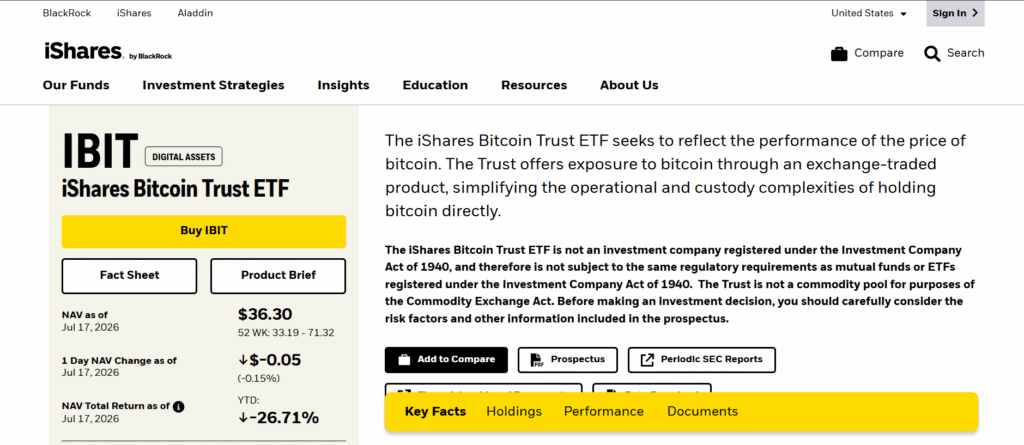
If liquidity is your top priority, IBIT is hard to beat. BlackRock’s fund manages around $47 billion in assets under management (AUM), charges a 0.25% fee, and uses Coinbase as its custodian. Its biggest advantage is liquidity. During volatile weeks, its options market has processed over 2 million contracts in a single session, something no competitor has matched.
2. FBTC (Fidelity Wise Origin Bitcoin Fund)

FBTC is the second-largest Spot Bitcoin ETF and manages around $11 billion in AUM while charging a 0.25% fee. What sets it apart is custody. Instead of relying on Coinbase like most competitors, Fidelity stores the Bitcoin through Fidelity Digital Assets, giving it full control over custody.
3. Grayscale Bitcoin Mini Trust (BTC)

This fund was created from GBTC to give existing investors a lower-cost alternative. It manages around $3.7 billion in AUM and, with a 0.15% fee, has the cheapest permanent fee among major Spot Bitcoin ETFs, making it a strong option if you’re investing for the long term.
4. HODL (VanEck Bitcoin Trust)

HODL manages around $1.1 billion in AUM and charges a 0.20% fee. Gemini, rather than Coinbase, serves as the custodian. It remains one of the few Spot Bitcoin ETFs that uses an alternative custodian, making it a popular choice for investors seeking greater custody diversification.
5. BTCO (Invesco Galaxy Bitcoin ETF)

Created by Invesco and Galaxy Digital, BTCO manages around $900 million in AUM and charges a 0.25% fee. It doesn’t have many standout features, but it has built a reputation for reliably tracking Bitcoin’s spot price.
6. ARKB (ARK 21Shares Bitcoin ETF)

ARKB charges a 0.21% fee and manages around $2.1 billion in AUM. It’s particularly popular with investors who already follow the ARK Invest brand.
7. EZBC (Franklin Bitcoin ETF)

With a 0.19% fee, EZBC is one of the lower-cost options. It’s backed by Franklin Templeton, one of the world’s oldest asset managers, and currently manages around $370 million in AUM.
8. BITB (Bitwise Bitcoin ETF)

BITB manages around $2.3 billion in AUM and charges a 0.20% fee. As a crypto-native asset manager, Bitwise launched one of the first Spot Bitcoin ETFs in January 2024, and it has remained a reliable low-cost option since then.
9. BRRR (CoinShares Bitcoin ETF)

Previously known as the Valkyrie Bitcoin Fund, BRRR is now managed by CoinShares, a European crypto investment firm. It charges a 0.25% fee and manages around $380 million in AUM. It’s a useful alternative if you want exposure outside the biggest ETF issuers.
10. GBTC (Grayscale Bitcoin Trust)

GBTC was the original Bitcoin investment vehicle and still manages around $8.7 billion in AUM, but it’s also the most expensive. Its 1.50% fee is six to ten times higher than most competitors. Today, many investors keep it mainly to avoid triggering capital gains taxes by switching funds rather than because it’s the best option for new investments.
Bonus: MSBT (Morgan Stanley Bitcoin Trust)

Launched on April 8, 2026, MSBT became the first Spot Bitcoin ETF from a major U.S. bank. It charges just 0.14%, the lowest fee on this list. Coinbase holds the Bitcoin, while BNY handles cash management and administration. The fund now manages around $370 million in AUM, largely driven by self-directed investors before Morgan Stanley’s advisors were allowed to recommend it.
A few things to keep in mind
- Fees matter. Even a 1% difference can have a big impact over the long term.
- Custody isn’t the same across funds. Most ETFs rely on Coinbase, while FBTC, HODL, and MSBT (partially) use different custody arrangements.
- These ETFs don’t generate income. None of them offer staking rewards or yield. Your returns depend entirely on Bitcoin’s price.
- Always check the latest numbers. Fees and assets under management can change over time, so verify them before investing.
Why Do Spot Bitcoin ETF Fees Matter?
Even small differences in fees can have a big impact on your returns over time. Since every Spot Bitcoin ETF aims to track the same asset, a lower expense ratio often means you keep more of your investment gains.
For example, funds like the Grayscale Bitcoin Mini Trust (BTC) and Franklin EZBC have some of the lowest fees in the market, while GBTC charges a much higher 1.50% annual fee. If you’re investing for the long term, choosing a lower-cost Bitcoin ETF can save you thousands of dollars over time, but it may come with trade-offs that you need to be aware of.
Spot Bitcoin ETF vs. Buying Bitcoin Directly
Neither option is better for everyone. It comes down to how you want to invest. A Spot Bitcoin ETF lets you buy Bitcoin through a brokerage account, while buying Bitcoin directly gives you full ownership of the asset.
For many investors, that’s an important difference. Learning how Bitcoin, wallets, private keys, and blockchain work can feel overwhelming, especially if you’re used to investing in stocks or ETFs. A Spot Bitcoin ETF removes that learning curve by letting you gain exposure to Bitcoin without leaving the traditional investment ecosystem you’re already familiar with.
If you buy Bitcoin directly, you’re responsible for securing it in a wallet and managing your private keys. With an ETF, the fund takes care of custody, making it a more convenient option for beginners. It can also simplify tax reporting since everything stays within your brokerage account.
On the other hand, if you want to use Bitcoin for payments, transfers, or DeFi, owning Bitcoin directly is the better choice because you control the asset yourself. Spot Bitcoin ETFs also make Bitcoin more accessible to mainstream investors, helping introduce the asset class to people who may not be ready to navigate the technical side of crypto.
What Are the Risks of Investing in Spot Bitcoin ETFs?
Spot Bitcoin ETFs make investing easier, but they don’t eliminate the risks of owning Bitcoin. Before investing, it’s important to understand what could affect your returns.
The biggest risk is Bitcoin’s price volatility. If Bitcoin falls, your ETF will lose value too. There’s also general market risk, as investor sentiment can cause large price swings. Changes in regulations could affect how Bitcoin ETFs operate or are taxed in the future.
Another consideration is custodian risk. Since the ETF holds the Bitcoin for you, you’re relying on its custodian to keep those assets secure. You should also be aware of tracking error, where an ETF’s performance differs slightly from Bitcoin’s price due to fees and operating costs. Finally, smaller funds may have lower liquidity, making them less efficient to trade during volatile markets.
How Do You Choose the Best Spot Bitcoin ETF?
The best Spot Bitcoin ETF isn’t always the one with the highest returns. A better approach is to compare the factors that can affect your investment over the long run.
Start with your investment goals. If you’re planning to hold for years, a lower expense ratio can make a noticeable difference. Next, look at the fund’s AUM and liquidity, as larger ETFs are usually easier to trade. It’s also worth checking who acts as the ETF’s custodian and whether the issuer has a strong reputation.
Finally, make sure the ETF is available through your brokerage account. Even the best Bitcoin ETF isn’t much use if you can’t easily buy or hold it through your preferred platform.
Frequently Asked Questions
Can I transfer a Spot Bitcoin ETF to a crypto wallet?
No. A Spot Bitcoin ETF is a security held in a brokerage account, not actual Bitcoin. You can’t move ETF shares to a crypto wallet or use them for on-chain transactions.
Do Spot Bitcoin ETFs pay dividends?
No. Spot Bitcoin ETFs don’t generate dividends because they simply hold Bitcoin. Your returns depend on changes in Bitcoin’s price, not regular income payments.
Can I invest in more than one Spot Bitcoin ETF?
Yes. There’s no rule limiting you to a single fund. Some investors hold multiple Bitcoin ETFs to diversify across issuers or take advantage of different fees and liquidity, although many choose just one low-cost fund for simplicity.
The post Best Spot Bitcoin ETFs (2026 Updated) appeared first on BitcoinTaxes.
and preserved the original HTML heading tags, sub headings, and key points are used as reference for rewriting a new post. The new written content should be unique and seamlessly integrate into a WordPress platform