
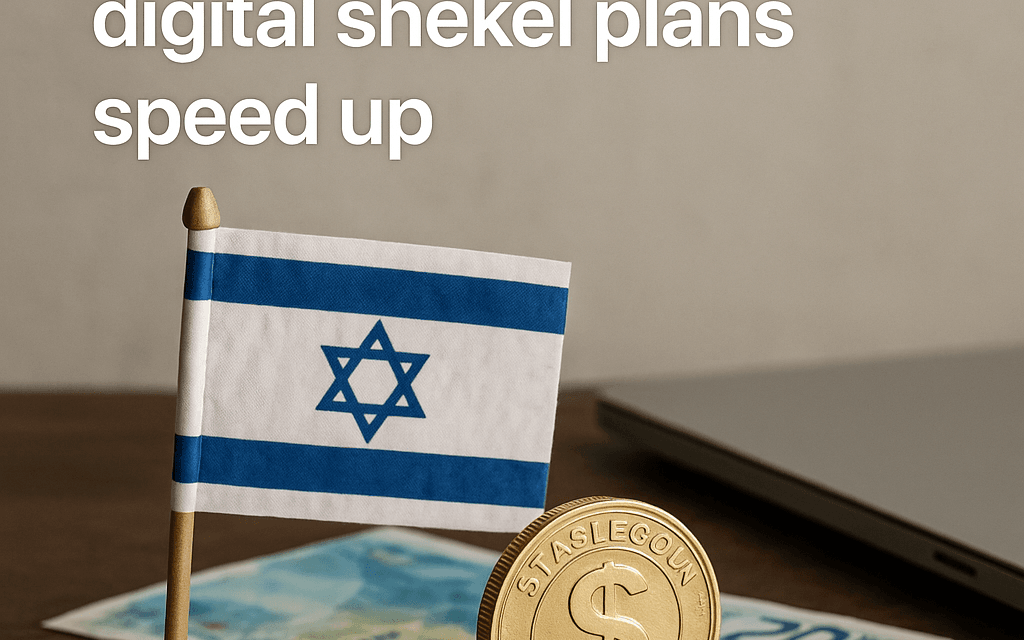

- Israel is gearing up for stricter oversight of stablecoins, aiming for their integration into the national payment system.
- Regulations highlight potential risks linked to the dominant roles of Tether and Circle in the market.
- Plans for the digital shekel are advancing, aspiring for a 2026 rollout as central bank digital currency development gains speed.
As part of its evolving financial landscape, Israel is prioritizing stronger regulation of stablecoins, indicating that they will be essential to the nation’s future payments ecosystem.
This regulatory shift reflects a broader reevaluation of how digital currencies integrate into everyday financial transactions.
No longer just niche assets for cryptocurrency enthusiasts, stablecoins are now emerging as pivotal instruments within the global payment framework.
During the recent Payments in the Evolving Era conference in Tel Aviv, Bank of Israel Governor Amir Yaron articulated that as stablecoin usage proliferates, regulatory measures will necessarily increase.
Global Adoption Fuels Regulatory Pressure
The Bank of Israel underscored the increasingly significant role of stablecoins in the global financial landscape.
With a market capitalization exceeding $300 billion and monthly trading volumes surpassing $2 trillion, stablecoins are becoming comparable to the balance sheets of mid-sized international banks.
The rising adoption, driven by their utility in trading, cross-border transactions, and as stable alternatives to traditional cryptocurrencies, necessitates the creation of clear and enforceable regulations.
Risks of Market Concentration
A primary focus of the conference was the risk associated with the concentration of stablecoin activity.
Currently, around 99% of market operations are linked to Tether and Circle, which raises significant concerns about systemic risk within a sector that supports much of the digital asset economy.
Israeli policy makers expressed that this reliance could expose the global payment ecosystem to vulnerabilities, where disruptions at the issuer level could have widespread consequences.
To address these concerns, there is a call for strict reserve requirements to ensure that these stablecoins are fully backed by liquid assets ready for redemption in times of market stress.
Progress on the Digital Shekel Initiative
In tandem with discussions on stablecoins, Israel is accelerating its own central bank digital currency initiative.
Yoav Soffer, overseeing the digital shekel project, articulated that the initiative aims to create central bank money intended for widespread utilization throughout the economy.
He introduced a planned roadmap for 2026, detailing upcoming phases of the project, with official recommendations expected to be released by the year’s end.
This rapid development mirrors trends seen within the European Central Bank and highlights a shift toward more proactive strategies by central banks in response to the pressures of private digital money.
The decision to fast-track the digital shekel project has stirred discussions in the crypto community, where observers connect the timeline to a broader global movement of central banks responding to the ascent of private financial alternatives.
As stablecoins gain traction in international commerce, the digital shekel is perceived as an essential maneuver to oversee and preserve national payment infrastructures while fostering innovation within regulated frameworks.