
Write a new detailed article from 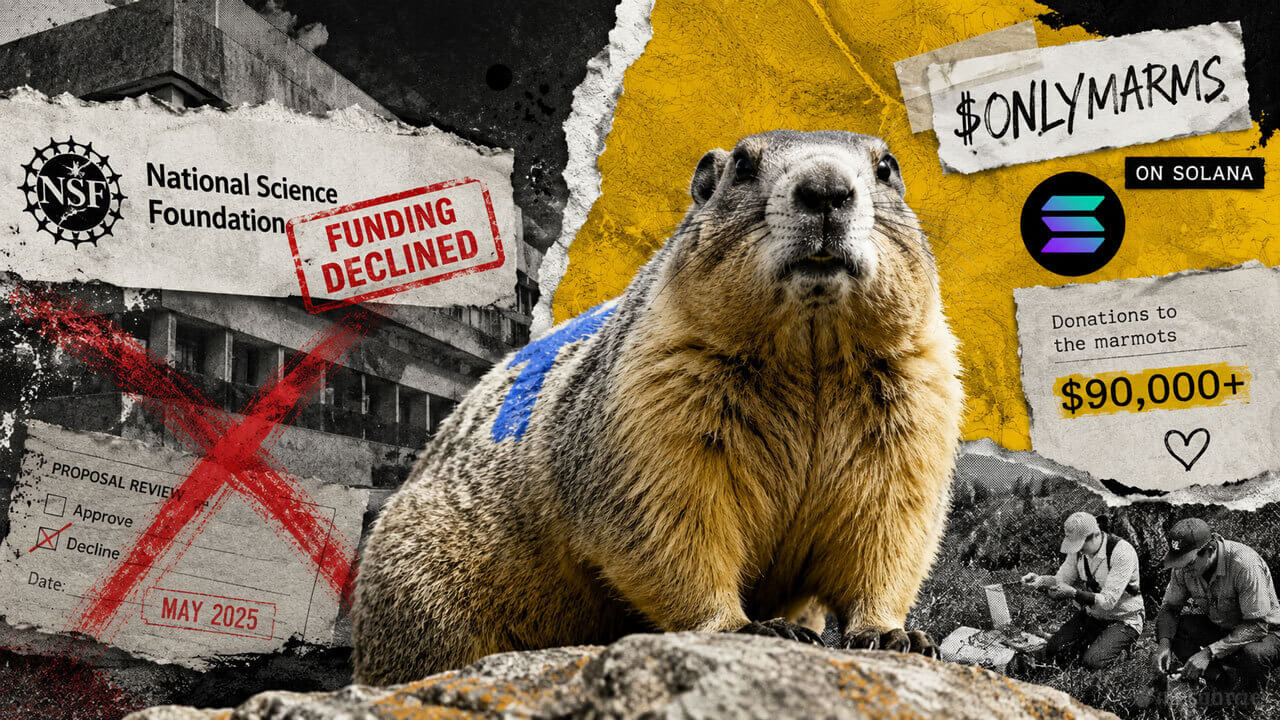
Every summer in Gothic, Colorado, a yellow-bellied marmot walks into a wire trap baited with oats and peanut butter. A scientist weighs it, takes samples, checks its ear tags, paints a temporary identification mark on its back, and releases it back into the mountain meadow.
The scientific value of this emerges through accumulation, with thousands of encounters repeated for more than six decades creating the second-longest study of individually identified wild mammals in the world. The record follows family lines, health, behavior, reproduction, and survival across generations, allowing biologists to see patterns that take much longer than a typical three-year research grant to emerge.
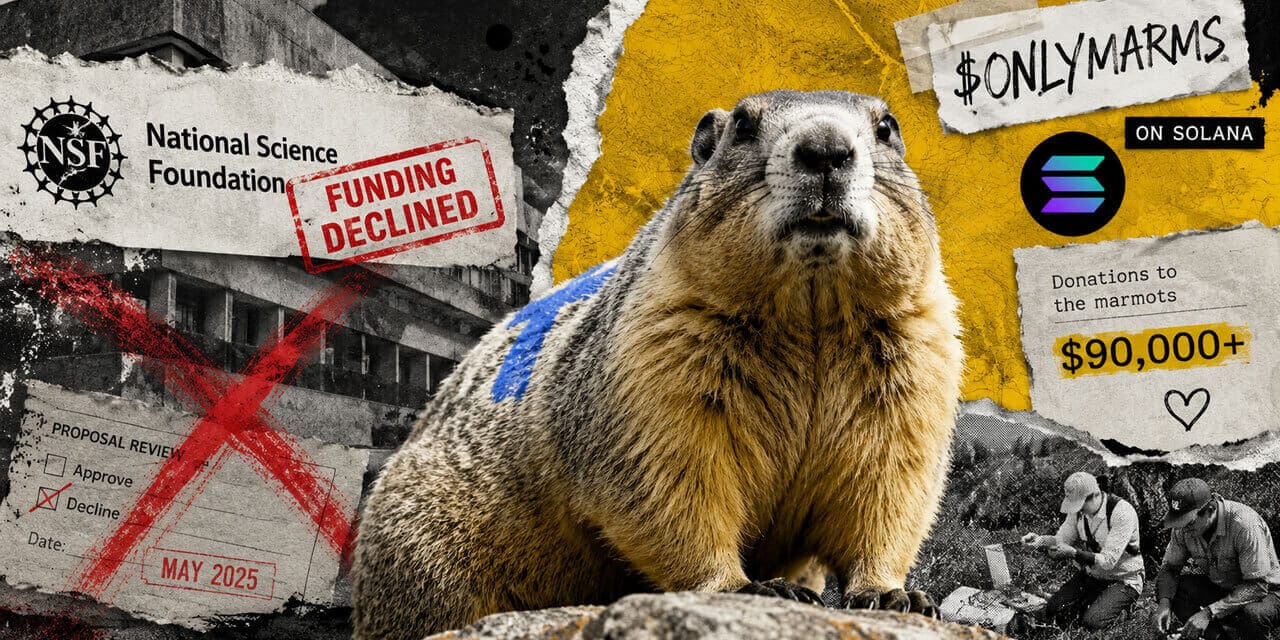
That record came close to acquiring a permanent blank this year when the National Science Foundation declined the team’s latest request for continued support. The scientists then began looking for money in places Kenneth Armitage, the biologist who started the project in 1962, could hardly have imagined.
UCLA professor Daniel Blumstein proposed a G-rated OnlyFans account called OnlyMarms, and an independent group of crypto traders later created a Solana meme coin whose creator fees have generated more than $150,000 for the research project.
All of this sounds like it was made for the internet, complete with comically chubby rodents, an adult platform, and a memecoin.
But the problem it addressed is much less playful because researchers can never return to 2026 and reconstruct which marmot emerged from hibernation, produced offspring, joined a new colony, or disappeared.
The value of never missing a summer
Armitage began tracking the Gothic marmot population in 1962 and directed the work until 2001, when Blumstein took over. Blumstein now runs it with University of Ottawa professor Julien Martin, preserving the basic routine that gives the record its power: researchers repeatedly observe identifiable animals in the same valleys using compatible methods.
The repetition has produced a very detailed genealogy, and a 2025 study used a pedigree spanning 11 generations and 2,196 animals to examine whether warning behavior can be inherited. Other work from the project has connected early hardship with longevity, mapped the relationship between social behavior and survival, and examined how an alpine mammal responds to warmer temperatures and erratic snowfall.
A single season gives researchers a population count, while six decades let them identify what altered its size and which animals fared best.
Winter supplies the smaller part of the record because marmots spend most of the year underground, living on fat accumulated during summer. Their heart rate, breathing, metabolism, and body temperature fall sharply during hibernation, making snow cover above the burrow an important layer of insulation.
Blumstein said the team monitored more than 160 animals before the last hibernation period and found about 60 when fieldwork resumed. He associated most of the loss with inadequate snow cover, an assessment that the longer record can place beside body condition, kinship, temperature, and conditions from earlier winters. The value comes from having every season available for comparison, including the bad ones.
Federal support arrived through a sequence of separate grants over six decades. UCLA’s account of the funding loss says the NSF declined the latest continuation request in late May as American universities were absorbing broader research cuts. That rejected renewal placed an uninterrupted record at risk.
Marmot’s Got Money Troubles
Blumstein borrowed the OnlyFans idea from the Apple TV series Margo’s Got Money Troubles and applied its premise to marmots with money troubles of their own. Graduate student Emily Renkey created OnlyMarms, filled it with nearly daily field videos and explanations, and worked through a verification process built for human creators.
The account is free, with visitors able to leave tips for photographs and videos of marmot life. It attracted thousands of visitors and raised roughly $6,000 in its first months, according to UCLA, before OnlyFans took its 20% share. That covered some supplies and staff time while leaving the team far short of any kind of dependable funding for recurring fieldwork.
The stranger source of money came when a group outside the project launched $OnlyMarms through Pump.fun, a platform that makes it easy to create and trade tokens on Solana, then directed the token’s creator royalties to the marmot researchers. Launched independently, the coin later got Martin’s support, and he accepted the fees and added its contract address to the project’s fundraising page.
The OnlyMarms token runs on a royalty system in which trading activity generates fees that accrue to a wallet controlled by the lab, allowing the team to claim them as donations. Martin’s project page now reports more than $150,000 raised for marmot research, while the community’s token page says every creator royalty goes to the project.
Token issuance, team allocation, trading, and buyers’ return expectations have nothing to do with the lab, leaving the researchers free to receive creator royalties as donations. The arrangement resembles Vitalik Buterin’s proposal for philanthropic meme coins, with speculative activity sending money toward a public purpose.
Token-generated donations are already more than 25 times the OnlyFans account’s gross tips, although future income depends on traders continuing to care when the hype fades. A longitudinal project needs money on a calendar, with trained field staff returning every summer regardless of whether marmots are trending or not on Pump.fun.
The internet picks a species
Marmots are the perfect animal for the attention economy that runs both the culture and the market. With names like Jamba Juice and Egg, these oversized squirrels gain significant fat before the winter.
The team has built on that advantage with the first Fat Marmot Week, a public tournament that ran from Aug. 24 through 28 before a winner was crowned Aug. 29. Visitors voted for the marmot that best represented healthy preparation for hibernation.
That campaign was a hit because it essentially recruited future donors while exposing the lottery inside viral patronage.
Because its payoff may take years, research has always required persuasion, and social platforms compress that process into a contest for attention that asks scientists to cultivate an audience alongside their animals and data.
OnlyMarms shows what a small crypto community can accomplish when the target is concrete, and the payments are direct. Trading gave one field team more time during a lapse in formal support, with the duration of that reprieve still tied to the internet’s appetite.
The marmot researchers have kept the science in view while enjoying the absurdity surrounding their new patrons. That money buys the one resource this project can never recover: another uninterrupted field season.
Gothic’s marmots will soon seal their burrows and slow their bodies through the winter while the researchers wait for spring. Thousands of strangers found the animals online, enjoyed the absurdity, and then helped preserve a 64-year scientific record whose real value comes from never having to start over.
and preserved the original HTML heading tags, sub headings, and key points are used as reference for rewriting a new post. The new written content should be unique and seamlessly integrate into a WordPress platform